
Workshop PFAS-free electrolysis
organized by the bi-national research project FFWD
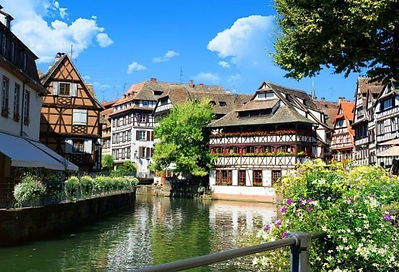
On the 10th and 11th of June, 2026, about 70 participants from academia and industry discussed material related challenges and perspectives for PFAS-free electrolysis in Strasbourg. A networking dinner in the city center closed the first day with room to exchange with experts in a relaxed atmosphere.
The workshop took place in the Grünewald Amphitheatre at the Campus Cronenbourg of CNRS (Building 25, BP28, 67037 Cedex 2, 23 Rue du Loess, 67200 Strasbourg). The organizers would like to thank everyone for the great technical support on site.

Please find below the program of the workshop and feel free to reach out if you are interested in one of the topics or contact to the speakers.

Program
Instructions for speakers
-
Please bring your presentation on an USB drive
-
We advise to keep your presentation to 12-15 min (20 min slots incl. questions)
Day 1
09:00 Getting together
09:30 Official Welcome
09:45 Material Development
09:45 - 10:30 Franco-German Project FFWD
10:30 - 10:50 Rational Design of Hydrocarbon Proton Conducting Membranes
Dr. habil. Klaus-Dieter Kreuer, MPI-FKF Stuttgart
10:50 - 11:10 Novel AEM-Polymers for Electrolysis Applications
Dr. Lukas Metzler, IMTEK, University of Freiburg
Break (20 min)
11:30 - 11:50 Fluoroaromatic and nonfluorinated cation-exchange membranes for PEMWE
Dr. rer. nat. Jochen Kerres, FZ Jülich GmbH, HI ERN (IET-2)
11:50 - 12:10 Processing Strategies for Directly Coated CCMs: Challenges and Opportunities
M. Sc. Linus Janning, KIT
12:10 - 12:30 Assessing electrolyser degradation: navigating the transition from state-of-the-art to emerging materials
Ass. Prof. Dipl. Merit Bodner, CEET, TU Graz
12:30 - 12:50 Radical Stability of Hydrocarbon Ionomers and Antioxidant Strategies
PD Dr. Lorenz Gubler, PSI
13:00 Lunch + Coffee Break
14:30 Material Development cont.
14:30 - 14:50 From Waste to Resource: Potential Reuse Pathways for PFSA Used in PEMFC and Electrolyzer Technologies
Ass. Prof. Dr. Florence Dubelley, LEPMI
14:50 - 15:10 ECOPEM – Development of non-fluorinated components for PEM fuel cells and water electrolyzers
Dr. Thomas Böhm, Jülich GmbH, HI ERN (IET-2)
15:10 - 15:30 Accessing New PFAS-Free Components for Next-Generation Hydrogen Technologies: The FASTCH2ANGE Project
Dr. Matteo A. Tallarida, RINA Consulting - Centro Sviluppo Materiali S.p.A.
15:30 - 16:00 Promisers: PFAS-free Polymer Materials for Proton Exchange Membrane (PEM)-based Fuel Cells and Electrolysers
Shuo Li / Dr. Bertrand Pavageau, Fumatech BWT GmbH / Syensqo
19:00 Networking Dinner in Strasbourg's historic city centre, the Grande Île, at the DrunkyStorkSocialClub
Day 2
09:00 Industrial Progress, Roadmaps and Requirements
09:00 - 09:10 Welcome
09:10 - 09:30 Non fluorinated materials for hydrogen at Michelin
Benoit Latour, Manufacture Française des Pneumatiques Michelin
09:30 - 09:50 Current developments at Greenerity towards PFAS-free CCMs for electrolyzer and fuel cells
Dr. Jozsef Speder, Greenerity GmbH
09:50 - 10:10 PFAS-free sealants, adhesives and resin solutions for electrolysers and BOP components
Andreas Arlt, WEVO-CHEMIE GmbH
Break (20 min)
10:30 - 10:50 AEM electrolysis from an industrial perspective: needs and opportunities
Dr. Tobias Schuler, Robert Bosch GmbH
10:50 - 11:10 The application of Branion membrane in anion exchange membrane water electrolysis
Dr. Xingyu Wu, NovaMea
11:10 - 11:30 Challenges and Opportunities for PFAS-free Water Electrolysis
William Bangay, Johnson Matthey
Break (20 min)
11:50 - 12:10 Fluorine free polymers in PEMWE membrane electrode assemblies - challenges and opportunities
Luise Schilde, Siemens Energy
12:10 - 12:30 PFAS-free Pemion ionomers and membranes for next generation PEM water electrolysis
Peter Ellis, Ionomr Innovations Inc.
12:30 - 12:50 Progress and Challenges in hydrocarbon-based proton-exchange-membrane MEAs
Dr. Matthias Breitwieser, ionysis GmbH
13:00 Lunch + Coffee Break
14:30 Characterization, Imaging and Modelling
14:30 - 14:40 Welcome
14:40 - 15:00 Simulation of Dual Ionomer–Electrolyte Ion Transport in AEMWE Catalyst Layers
Prof. Dr. Antoine Bonnefont, Grenoble Institute of Technology, CNRS, Grenoble INP, LEPMI
15:00 - 15:20 Probing Catalyst Layers Morphology and Dynamics in Electrocatalysis with Complex Capacitance
Dr. Tristan Asset, ICPEES, CNRS, University of Strasbourg
15:20 - 15:40 3D Imaging by Electron Tomography of Ionomer Distribution in PEMFC Catalyst Layers
Dr. Laure Guétaz, CEA Grenoble
Break (20 min)
16:00 - 16:20 Development of computational models for ion exchange membrane water electrolyzers
Prof. Dr. Marc Secanell, University of Alberta
16:20 - 16:40 In situ characterization of PEM electrolysis cells: some observations on transport and transfer phenomena
Prof. Dr. Gaël Maranzana, LEMTA, University of Lorraine
16:45 Closing Remarks
17:00 End of Workshop

PFAS-free electrolysis
State of the art
In state of the art, per- and polyfluoroalkyl substances (PFAS) are used as proton conductive ionomer and membrane in PEM electrolysis.
PFAS are so called « everlasting chemical » that are distributed all over the planet with severe consequences for the environment.
Additional to enviromental concerns, relatively high synthesis cost and poor thermo-mechanical properties at temperatures > 90°C motivate the development of PFAS-free electrolysis.



Known PFAS contamination sites in Europe, November 2023 (https://foreverpollution.eu/map/)
Hydrocarbon polymers
A PFAS-free alternative for proton conductive ionomer and membranes in PEM electrolysis are hydrocarbons, allowing for:
-
Higher operation temperature
-
Lower gas cross-over
-
Higher proton conductivity
-
Less environmental pollution & easier recycling
-
Reduced synthesis cost
-
More freedom for chemical functionalization
For the development of PFAS-free electrolysis, goals in FFWD are:
-
Identify challenges along the hydrocarbon MEA manufacturing chain starting from polymer synthesis
-
Identify degradation markers during performance and longterm testing

Registration is closed - please contact Dr. Melanie Bühler if you need assistance.

Contact
Prof. Dr. Gaël Maranzana
Dr. Melanie Bühler

Dr. Andreas Münchinger
Co-Organization FFWD Workshop
Institution: Hahn-Schickard Freiburg
Mail: andreas.muenchinger@hahn-schickard.de

Acknowledgement
This event is hosted by the Centre National de la Recherche Scientifique and the University of Strasbourg.

FFWD is funded on the German side by the Federal Ministry of Research, Technology and Space (BMFTR) under the grant 03SF0781A and on the French side by the Agence Nationale de la Recherche (ANR) under the grant ANR-24-ENER-0005.

